

About Us
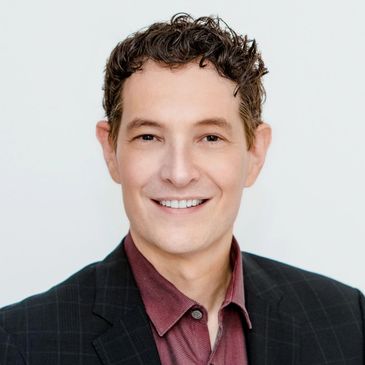
Dr Trevor Hart
Carmine Malfitano, PhD, MSW, RSW
Carmine Malfitano, PhD, MSW, RSW
Trevor is the Director of the HOPE Centre for Gender & Sexual Minority People.
Trevor holds a Research Chair in Gay and Bisexual Men’s Health from the Ontario HIV Treatment Network and is a Professor of Psychology at Toronto Metropolitan University.
Trevor's work focuses on community-based research and building capacity in organizations se
Trevor is the Director of the HOPE Centre for Gender & Sexual Minority People.
Trevor holds a Research Chair in Gay and Bisexual Men’s Health from the Ontario HIV Treatment Network and is a Professor of Psychology at Toronto Metropolitan University.
Trevor's work focuses on community-based research and building capacity in organizations serving sexual and gender minority communities, including training frontline staff.

Carmine Malfitano, PhD, MSW, RSW
Carmine Malfitano, PhD, MSW, RSW
Carmine Malfitano, PhD, MSW, RSW
Carmine Malfitano is a Registered Social Worker and Psychotherapist.
He is Director of Education and Training at the Centre for Psychology and Emotional Health and contributes to the Greenberg Institute for Emotion Focused Therapy, where he co-designs and oversees international training programs.
He is a Clinician Specialist at the Prince
Carmine Malfitano is a Registered Social Worker and Psychotherapist.
He is Director of Education and Training at the Centre for Psychology and Emotional Health and contributes to the Greenberg Institute for Emotion Focused Therapy, where he co-designs and oversees international training programs.
He is a Clinician Specialist at the Princess Margaret Cancer Centre, focused on training and education, and serves as a Sessional and Adjunct Lecturer at the University of Toronto.
At the Sexual and Gender Minority Counseling Training Hub, he trains frontline staff with a focus on practical counseling skills for real-world settings.

Scott Simpson, BA, CWC
Carmine Malfitano, PhD, MSW, RSW
Scott Simpson, BA, CWC
Scott was a Research Assistant on the Gay Poz Sex research projects and provides counseling for people living with medically neglected chronic illness through his practice, Remedies Counseling.
Scott’s work focuses on community-based approaches to care, including training and supervision, and building the counseling capacity of frontline staff working in queer-serving organizations.
Published GPS Research

Hart, T., Noor, S., Skakoon-Sparling, S., Lazkani, S., Gardner, S., & Leahy, B. et al. (2020). GPS: A Randomized Controlled Trial of Sexual Health Counseling for Gay and Bisexual Men Living With HIV. Behavior Therapy. https://doi.org/10.1016/j.beth.2020.04.005
Hart, T., Stratton, N., Coleman, T., Wilson, H., Simpson, S., & Julien, R. et al. (2016). A Pilot Trial of a Sexual Health Counseling Intervention for HIV-Positive Gay and Bisexual Men Who Report Anal Sex without Condoms. PLOS ONE, 11(4), e0152762. https://doi.org/10.1371/journal.pone.0152762
Hart, T., Willis, A., Simpson, S., Julien, R., Hoe, D., & Leahy, B. et al. (2016). Gay Poz Sex: A Sexual Health Promotion Intervention for HIV-Positive Gay and Bisexual Men. Cognitive And Behavioral Practice, 23(4), 517-529. https://doi.org/10.1016/j.cbpra.2015.11.002